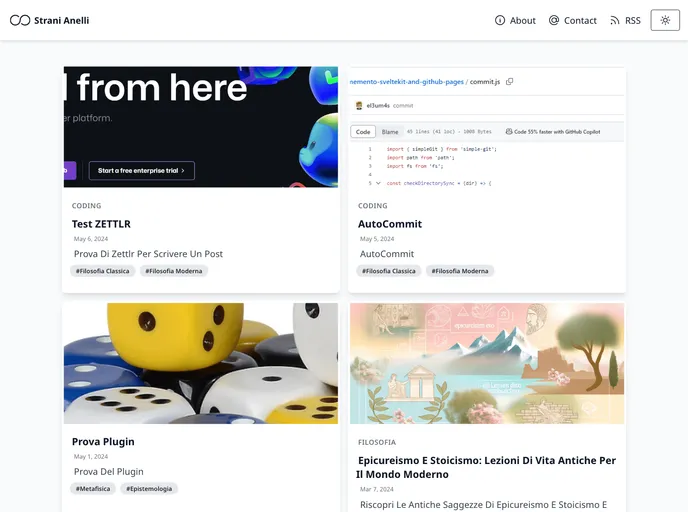
MEMENTO SvelteKit & GitHub Pages is a template that allows users to create a blog using SvelteKit and deploy it easily on GitHub Pages.
To create a new project based on this template using degit, follow these steps:
npx degit username/reponame my-blog
Replace ‘username/reponame’ with the actual repository name you want to clone and ‘my-blog’ with the desired name for your project.
cd my-blog
npm install
npm run dev
This will launch the blog on a local development server, allowing you to view and test it in your browser.
npm run build
This command will generate optimized and minified files for the blog.
npm run deploy
Make sure you have set up the necessary GitHub Pages configuration, including the repository’s settings and branch configuration, before running this command.
MEMENTO SvelteKit & GitHub Pages is a template that provides an easy and efficient way to create a blog using SvelteKit. With seamless integration with GitHub Pages, deploying the blog becomes hassle-free. Its use of Svelte’s component-based architecture allows for the creation of modular and reusable components, enhancing code organization and maintainability.